

LEVEL 01 SHAPES & DIMENSIONS
Choose the ground.
Start with a 30 m by 20 m rectangle. Set the length and breadth before making a plan.
30 m × 20 m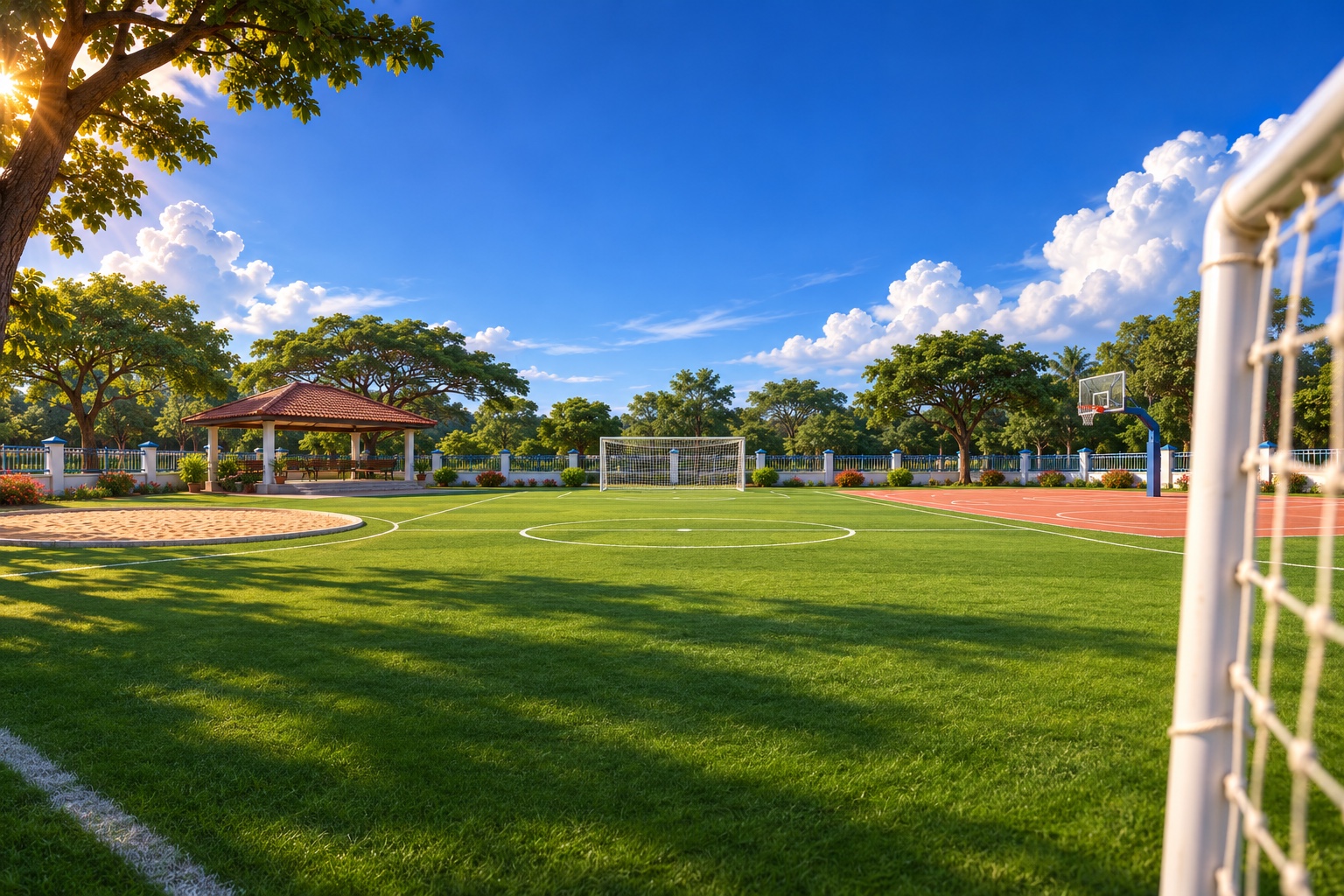
Six small decisions. Watch the same plot come together.
A sneak peek at the pilot. No learning progress is recorded here.
Start with a 30 m by 20 m rectangle. Set the length and breadth before making a plan.
30 m × 20 mFill the ground, one square metre at a time. Length × breadth gives the total space available.
30 × 20 = 600 m²Follow the outside edge as the fence rises. That 100 m journey around the plot is its perimeter.
2 × (30 + 20) = 100 mMark a 4 m radius—an 8 m diameter—then draw the circle. The sand zone covers about 50.27 m².
π × 4² ≈ 50.27 m²After the sand zone, about 549.73 m² of grass remains. Kids can explore different ways to use that space.
Grass = plot area − sand areaGoals in, hoops up, gate open. A patch of land becomes a place to play—built from mathematical decisions.
Try the playground builderA little longer? A little wider?
Each choice changes the maths.
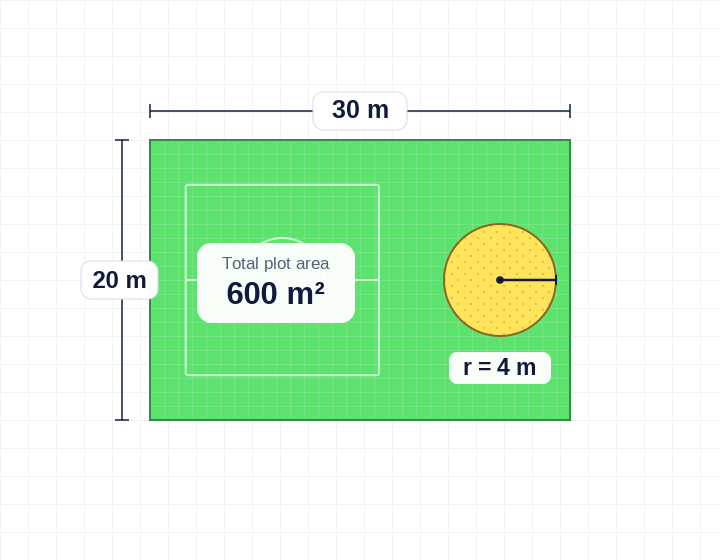
Area covers the ground. Each grid square is 1 m².
Court lines are painted on the grass. Only the sand zone is subtracted.
These two playgrounds both cover 400 m². Which needs less fencing?
Morpho’s upcoming maths pilot for K–8 kids in India turns mensuration into a playground-building adventure. This is a small preview of what’s taking shape.
Explore Morpho’s maths pilot for K–8 kids. Kids can build, test ideas and see what changes.